
Here Is A Flip Book Also <<<Click for ebook

Personal Development Motivation: Your Path to Growth and Success
Need to stay motivated on your self-improvement journey? This guide helps anyone feeling stuck in their personal growth, especially if you’re struggling to maintain momentum. We’ll explore practical goal-setting strategies that actually work, show you how to push past common growth obstacles, and reveal simple motivation triggers that keep you moving forward even when things get tough.
Understanding Personal Development
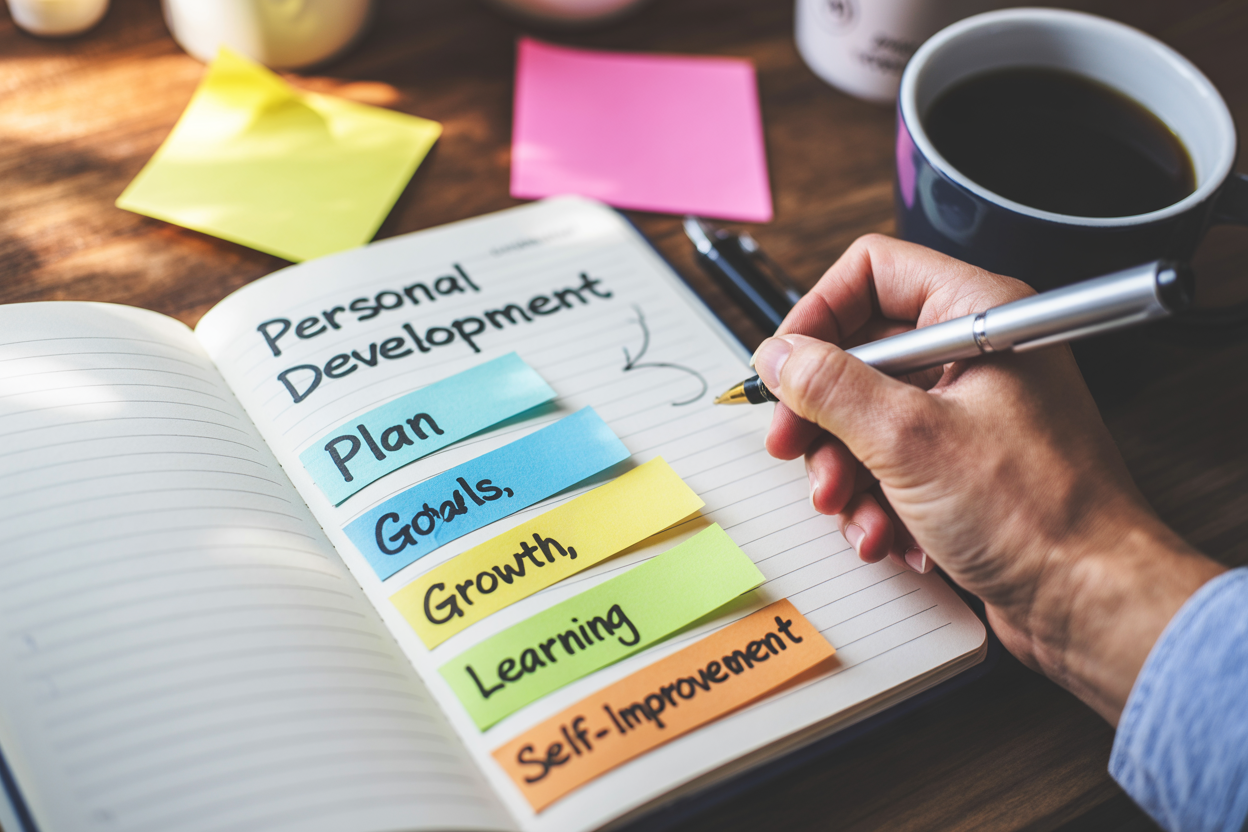
What personal development truly means
Ever wonder why some people seem to have life figured out while others stay stuck? The difference often boils down to personal development.
Personal development isn’t just some fancy term thrown around by life coaches. It’s the intentional process of growing yourself—mentally, emotionally, and spiritually.
Think of it as being both the sculptor and the clay. You’re constantly chiseling away at yourself, removing what doesn’t serve you and adding what does.
Most people get this wrong. They think personal development means reading a self-help book or attending a seminar. But that’s like saying going to the gym once makes you fit.
Real personal development happens when you:
- Face uncomfortable truths about yourself
- Take consistent action despite fear
- Make conscious choices instead of running on autopilot
- Evaluate your progress honestly
It’s not a destination—it’s a lifelong journey. You never “arrive” at personal development. You simply become more aware, more intentional, and more aligned with who you want to be.
The beauty? It’s entirely yours. Nobody can develop you but you. And nobody benefits from your growth more than you do.
Why motivation is the key driver
Motivation isn’t just helpful for personal development—it’s the engine that powers the whole vehicle.
Without motivation, all the knowledge in the world won’t move you forward. I’ve seen brilliant people with tremendous potential who never achieve much because they lack the internal drive to push through challenges.
Here’s what makes motivation so crucial:
It transforms information into action. Reading about personal development is useless if you don’t apply what you learn. Motivation bridges that gap.
Motivation comes in two flavors:
- Intrinsic motivation – Doing something because it fulfills you
- Extrinsic motivation – Doing something for external rewards
Both work, but intrinsic motivation creates lasting change. When you’re genuinely excited about becoming better, not just chasing rewards, you’ll stick with it when things get tough.
The hard truth? Motivation isn’t constant. It fluctuates like the weather. Some days you’ll feel unstoppable, others you’ll barely want to get out of bed.
That’s where discipline enters the picture. Discipline is what you rely on when motivation goes missing. It’s deciding in advance that you’ll take action regardless of how you feel.
The most successful people in personal development build systems that don’t solely depend on feeling motivated. They create habits, routines, and accountability structures that carry them through motivational lows.
Remember this: motivation gets you started, but it’s the systems you build that keep you going.
The science behind successful self-improvement
The brain science behind personal development is fascinating. When you understand how your brain works, you can hack it to create lasting change.
Your brain loves efficiency. It creates neural pathways—essentially highways for electrical signals—for behaviors you repeat. The more you travel these highways, the stronger they become.
This explains why changing is so darn hard. You’re not just adopting new behaviors; you’re literally rewiring your brain.
Neuroplasticity is your friend here. It’s your brain’s ability to reorganize itself by forming new neural connections. This continues throughout your life, not just during childhood as once believed.
What does this mean for your personal development journey? A few key things:
Consistency trumps intensity. Small, daily actions rewire your brain more effectively than occasional massive efforts. This is why the person who exercises 20 minutes daily outperforms someone who does three-hour workouts once a week.
Your brain responds to rewards. When you celebrate small wins, your brain releases dopamine, reinforcing the behavior. Smart personal development includes building reward systems.
Environment shapes behavior. Your brain processes about 11 million bits of information per second, but you’re only consciously aware of about 40. Your environment influences you more than you realize. Design it deliberately.
Studies show that visualizing success activates many of the same neural pathways as actually achieving it. This doesn’t replace action, but it primes your brain for success.
The bottom line? Personal development isn’t just philosophical—it’s biological. Understanding these mechanisms gives you an edge in creating lasting change.
Breaking through common misconceptions
Personal development gets a bad rap sometimes. Let’s bust some myths that might be holding you back.
Myth #1: Personal development is only for broken people
Truth: Every successful person I know invests heavily in their own growth. The most accomplished individuals are often the most dedicated to improvement. Growth isn’t about fixing what’s broken—it’s about expanding what works.
Myth #2: You need to make dramatic changes to see results
Truth: Small, consistent adjustments compound dramatically over time. Improving by just 1% daily makes you 37 times better over a year. Don’t underestimate the power of tiny habits.
Myth #3: Personal development requires expensive courses and coaches
Truth: While quality guidance helps, some of the most powerful development tools are free: reading, reflection, meditation, conversations with wise friends, and simply trying new things.
Myth #4: It’s selfish to focus on yourself
Truth: Personal development isn’t selfish—it’s necessary. When you grow, you bring more to every relationship and contribution. Like they say on airplanes: put on your own oxygen mask before helping others.
Myth #5: Once you reach your goals, you’re done
Truth: Personal development isn’t about reaching a destination—it’s about enjoying the journey of becoming. The moment you think you’ve “arrived” is the moment you stop growing.
Myth #6: You need to feel motivated to make progress
Truth: Motivation is unreliable. Sustainable personal development comes from creating systems that work even when motivation fades. The pros show up regardless of how they feel.
Myth #7: If it doesn’t feel good, you’re doing it wrong
Truth: Growth is often uncomfortable. The most significant development happens when you’re stretched beyond your comfort zone. Discomfort isn’t a sign to stop—it’s often a sign you’re on the right track.
Shake off these misconceptions and you’ll free yourself to approach personal development more authentically. Growth isn’t about perfection—it’s about progress. And progress only requires that you take the next step, not that you see the entire staircase.
Setting Powerful Development Goals

A. Creating SMART objectives that inspire action
We’ve all been there. You wake up one morning thinking, “Today’s the day I change my life!”
But two weeks later, that burst of motivation is gone. Your grand plans? Collecting dust like that treadmill you bought last January.
The problem isn’t your desire to grow. It’s how you frame your goals.
Enter SMART objectives – the difference between “I want to be better” and actually becoming better.
SMART stands for Specific, Measurable, Achievable, Relevant, and Time-bound. Sounds fancy, but it’s really just common sense on steroids.
Take “I want to read more” versus “I’ll read 20 pages of personal development books every morning before work for the next 30 days.” See the difference? The second one gives your brain exactly what to do, when to do it, and how to know you’ve succeeded.
But here’s what nobody tells you about SMART goals: they only work when they light a fire in your belly.
A perfectly crafted SMART goal that bores you to tears won’t get you anywhere. The secret ingredient is emotional connection.
Ask yourself: “If I achieve this goal, how will it make me feel? What will it enable in my life?”
Maybe reading those 20 pages daily means you’ll finally have the confidence to speak up in meetings. Or perhaps learning that new skill means you can finally quit the job that’s slowly crushing your soul.
When crafting your SMART objectives, try this formula:
- Start with the emotion or life change you want
- Work backwards to the specific actions that will get you there
- Build in concrete measurements and timeframes
- Make sure it stretches you without breaking you
Here’s a quick comparison of weak vs. powerful SMART objectives:
| Weak Objective | Powerful Objective |
|---|---|
| Get better at public speaking | Deliver a 5-minute presentation to my team by March 31st with zero filler words and maintain eye contact 80% of the time |
| Learn meditation | Complete a 10-minute meditation session for 21 consecutive days using the Headspace app, journaling one insight after each session |
| Improve my finances | Save $300 monthly for the next 6 months by cooking at home 5 nights weekly and canceling 3 subscription services I rarely use |
The powerful objectives aren’t just more specific – they have built-in action plans. They tell you exactly what winning looks like. And when you can see the finish line, you’re much more likely to race toward it.
B. Aligning goals with core values
Here’s the brutal truth most personal development gurus won’t tell you: most goals fail because they’re someone else’s goals.
You’re chasing a promotion because your parents value status. You’re grinding toward six-pack abs because Instagram made you feel inadequate. You’re learning coding because everyone says that’s where the money is.
Goals disconnected from your core values are like plants without roots. They might stand for a while, but they’ll never truly thrive.
So what are core values? They’re your non-negotiables. The principles that guide your decisions when nobody’s watching. The stuff that makes you feel most alive.
Some common core values include:
- Freedom
- Connection
- Creativity
- Security
- Growth
- Service
- Adventure
- Recognition
When your goals align with these deeper values, motivation becomes almost automatic. You’re not just checking boxes – you’re expressing who you really are.
Think about it. If “freedom” is your core value, saving money isn’t just about having cash in the bank – it’s about creating options and independence. That hits different.
If “connection” drives you, learning public speaking isn’t about career advancement – it’s about creating meaningful relationships through better communication.
Here’s how to align your goals with your values:
- Get brutally honest about your values. Not what you think they should be, but what they actually are.
- For each goal you’re considering, ask: “How does this express or serve my core values?”
- If there’s no clear connection, either modify the goal or drop it entirely.
- Reframe your goal language to explicitly connect to your values.
The people who seem endlessly motivated? They’re not superhuman. They’ve just discovered this alignment trick. Their goals aren’t separate from who they are – they’re expressions of their deepest selves.
A computer programmer who values creativity isn’t “forcing herself” to code. She sees coding as creative expression. A fitness enthusiast who values service sees his workouts as building capacity to help others.
This isn’t just feel-good fluff. It’s practical psychology. When goals and values align, willpower becomes less necessary. You’re swimming with the current instead of against it.
C. Breaking big ambitions into manageable steps
Big dreams are exciting. They’re also terrifying. And your brain hates being terrified.
That’s why you procrastinate on your most important goals. Your brain is protecting you from the anxiety of potential failure.
The solution isn’t more motivation. It’s smaller steps.
When you break massive ambitions into tiny, almost laughably easy actions, something magical happens. The resistance melts away. Your brain stops fighting you. Progress begins.
I call this “micro-stepping” – and it’s the secret weapon of every successful person I’ve ever studied.
Want to write a book? Don’t start with “write a book.” Start with “write one paragraph.” Want to transform your health? Forget the complete lifestyle overhaul. Begin with drinking one glass of water each morning.
These tiny actions might seem insignificant, but they serve two crucial purposes:
- They bypass your brain’s threat detection system
- They build momentum through small wins
The science backs this up. Each time you complete a task – no matter how small – your brain releases dopamine, the feel-good chemical that motivates repeat behavior. Stack enough of these small wins, and suddenly you’re not pushing yourself to act. You’re being pulled forward by the addictive feeling of progress.
Here’s how to break down any ambitious goal:
- Identify your big ambition (the end destination)
- Map out the major milestones along the way (your roadmap)
- Break each milestone into weekly objectives
- Convert those objectives into daily tasks
- Reduce those daily tasks into “can’t-fail” micro-actions
For example, if your goal is landing a new job in your dream field:
- Big ambition: Land a marketing position at a tech startup
- Milestone: Create a portfolio of work samples
- Weekly objective: Complete one sample project
- Daily task: Work on the project for 30 minutes
- Micro-action: Open your laptop and write one headline
The micro-action is so simple that excuses evaporate. And once you’ve written that headline, you’ll likely continue.
This approach also gives you a crucial psychological advantage: daily victories. Instead of waiting months to feel successful, you win every single day. This consistent positive reinforcement keeps you going when motivation inevitably fades.
Remember, progress isn’t about intensity. It’s about consistency. And consistency comes from making the next step so simple that you’d feel silly not doing it.
Overcoming Growth Obstacles

Identifying your personal resistance patterns
We all hit walls in our personal growth journey. The difference between those who breakthrough and those who don’t? They recognize their own resistance patterns.
Look, growth is uncomfortable. Your brain is literally wired to keep you safe and comfortable – which means it’ll fight like hell against change.
The first real step to overcoming any obstacle is spotting your particular flavor of self-sabotage. Maybe you’re the master of excuses (“I’ll start tomorrow”), or perhaps you’re the perfectionist who won’t begin until conditions are “just right” (spoiler: they never will be).
Ask yourself:
- Do you suddenly get “too busy” when approaching meaningful change?
- Do you find yourself doom-scrolling instead of working on that skill?
- Does your inner critic get extra loud when you’re about to level up?
These aren’t random behaviors – they’re resistance patterns. They’re your brain’s clever way of keeping you in the comfort zone.
Try this: Keep a “resistance journal” for a week. Each time you notice yourself avoiding growth work, jot down:
- What you were avoiding
- What you did instead
- What thoughts or feelings came up
Patterns will emerge faster than you’d think. And naming your enemy is half the battle.
Strategies for pushing through plateaus
Plateaus aren’t failures – they’re part of the process. But man, they can feel like quicksand when you’re stuck in one.
Growth never follows a straight line. It comes in bursts, followed by flat periods where nothing seems to change no matter how hard you push. These plateaus are where most people give up – which is exactly why you shouldn’t.
Here’s how to power through:
Change your inputs
If you’ve been reading the same authors, listening to the same podcasts, and following the same routines – shake it up. Your brain needs new stimuli to create new connections.
Microdose challenges
When stuck, going smaller (not bigger) often works best. Can’t write that book? Commit to 50 words. Can’t stick with meditation? Start with 60 seconds.
The 1% shift approach
Forget massive overhauls. What’s one tiny thing you could improve by just 1% today? These micro-improvements compound dramatically over time.
Strategic discomfort
Comfort is the enemy of growth. Deliberately put yourself in slightly uncomfortable situations daily. Cold shower, difficult conversation, new skill – pick your poison.
Remember when you learned to drive? There was that awkward period where you consciously thought about every single movement. Then one day, it clicked. Plateaus work the same way – your brain is quietly integrating learning behind the scenes before your next breakthrough.
Transforming failures into valuable lessons
Failure isn’t the opposite of success. It’s part of it.
Every single person you admire has a graveyard of failures they’ve built their success upon. The difference is what they extracted from those experiences.
The problem isn’t that you failed. It’s that you might be failing inefficiently – not extracting the gold from the rubble.
Try this framework after any setback:
- Separate identity from outcome: “I failed” versus “The attempt failed”
- Isolate variables: What specific elements didn’t work?
- Identify surprise: What assumptions were proven wrong?
- Extract principles: What fundamental truth did this teach you?
- Apply forward: How will this inform your next attempt?
Here’s a practical example:
Failed goal: "I tried to establish a morning routine but quit after a week"

Identity separation: "The morning routine approach I tried didn't stick"
Variables: Tried changing too many habits at once; started with 5:00 am when I'm naturally a night person
Surprise: My willpower was far lower in the morning than I assumed
Principle learned: Habit stacking works better than complete overhauls
Forward application: Start with one 10-minute habit at 7:00 am instead
The most successful people aren’t failing less – they’re just learning more from each failure. They’ve trained themselves to ask better questions when things go wrong.
Bonus tip: Create a “failure resume” where you document your biggest flops and what they taught you. It’s surprisingly empowering.
Building resilience for long-term success
Personal development isn’t a weekend workshop – it’s a lifelong game. And resilience is what keeps you in that game when everything gets tough.
Resilience isn’t something you’re born with or without. It’s a skill you build through deliberate practice.
Think of resilience like emotional fitness. Just as physical training breaks down muscle fibers so they grow back stronger, emotional challenges can build your psychological strength—if you approach them correctly.
Some practical resilience-building tactics:
Reframe setbacks as temporary and specific
When something goes wrong, train yourself to see it as a momentary, specific issue rather than a permanent, pervasive failure. “I struggled with this presentation” versus “I’m terrible at communication.”
Develop your stress tolerance
Gradually expose yourself to challenging situations, then reflect on your survival. Your brain needs evidence that you can handle discomfort.
Practice self-compassion (not self-esteem)
Self-esteem depends on success. Self-compassion doesn’t. Talk to yourself like you would a good friend who’s struggling. This isn’t fluffy advice—studies show self-compassionate people actually bounce back faster.
Build your support network
Resilience isn’t solo work. Identify 3-5 people who truly support your growth and be intentional about maintaining those relationships.
Create recovery rituals
Resilience requires recharging. Develop non-negotiable recovery practices that restore your emotional energy—whether that’s nature walks, creative expression, or deep conversation.
The path to any worthwhile goal is paved with unexpected obstacles. Resilience isn’t about avoiding those obstacles—it’s about developing the confidence that you can handle whatever comes your way.
Creating accountability systems
Let’s be brutally honest: motivation is unreliable. It comes and goes like a flaky friend. That’s why serious growth requires serious accountability.
Your brain is exceptionally good at letting yourself off the hook. External accountability creates the structure that keeps you moving when motivation inevitably dips.
Here are accountability systems that actually work:
The financial stake
Put money on the line. Apps like Stickk let you set goals where cash goes to charity (or even better, a cause you hate) if you fail. Nothing motivates like the possibility of loss.
The public declaration
Announce your commitment to people whose opinion you value. Social pressure is powerful—use it intentionally rather than letting it use you.
The accountability partner
Find someone with complementary goals. Set weekly check-ins with clear expectations. The key is choosing someone who’ll call you on your excuses, not just nod sympathetically.
The process tracker
Don’t just track outcomes—track behaviors. Create a visual system (digital or physical) that shows your consistency. Don’t break the chain of X’s on the calendar.
The environmental design
Structure your environment to make accountability automatic. Want to read more? Delete social apps and leave books everywhere. Environment often beats willpower.
The most effective accountability combines multiple approaches. Maybe you join a paid mastermind group (financial + social accountability) while using a habit tracker app (process accountability) and restructuring your morning environment (environmental accountability).
Remember, accountability isn’t about punishment—it’s about creating systems that align your current actions with your future goals. The right accountability feels supportive, not restrictive.
The most successful people aren’t necessarily more disciplined—they’ve just built better accountability structures around themselves.
Harnessing Motivation Triggers

Discovering Your Unique Motivation Style
Ever notice how some people jump out of bed at 5 AM to hit the gym while others can barely drag themselves there even after promising themselves for weeks?
That’s because motivation isn’t one-size-fits-all.
Your motivation style is as unique as your fingerprint. Some people get fired up by competition, others by quiet achievement. Some need public accountability, others work best when answering only to themselves.
Finding your personal motivation style isn’t just helpful—it’s game-changing.
Think about the last time you felt truly motivated to do something difficult. What sparked that fire? Was it:
- The thrill of proving someone wrong?
- The satisfaction of mastering a new skill?
- The social connection of working with others?
- The quiet pride of hitting a personal milestone?
Your answer reveals important clues about what makes you tick.
I worked with a client named Maya who kept failing at her fitness goals despite trying every program under the sun. When we dug deeper, we discovered she was forcing herself into solo workouts when what really motivated her was the energy and accountability of group classes. Once she switched approaches, her consistency skyrocketed.
Try this quick exercise: List five activities you’ve stuck with voluntarily for over a year. Now identify what kept you coming back. The patterns will surprise you.
Common motivation styles include:
- Community-Driven: You thrive when connected to others working toward similar goals
- Competition-Focused: You push hardest when trying to win or beat a benchmark
- Curiosity-Led: You stay engaged when learning and discovering new aspects
- Values-Aligned: You persist when activities connect to your deeper principles
- Recognition-Motivated: You energize when achievements are acknowledged
- Problem-Solving: You engage when tackling challenges and finding solutions
Once you identify your dominant style, you can stop wasting energy on motivation strategies that don’t work for you.
Leveraging Intrinsic vs. Extrinsic Motivators
Here’s the brutal truth about motivation that nobody wants to admit: those external rewards we chase often backfire.
You’ve probably experienced this. The shiny new workout clothes that somehow never make it to the gym. The productivity app that worked great for two weeks before becoming digital clutter.
That’s the problem with extrinsic motivators—they’re powerful but temporary.
Extrinsic motivation comes from outside yourself: money, praise, status, rewards. Intrinsic motivation bubbles up from within: curiosity, enjoyment, personal values, satisfaction.
Here’s how they stack up:
| Extrinsic Motivators | Intrinsic Motivators |
|---|---|
| Money/rewards | Personal enjoyment |
| Recognition | Curiosity |
| Avoiding punishment | Sense of purpose |
| Competition | Mastery |
| Deadlines | Autonomy |
| Social pressure | Alignment with values |
Research consistently shows that while extrinsic motivators create quick bursts of action, intrinsic motivators sustain long-term commitment.
But here’s where most advice goes wrong: treating these as enemies rather than partners.
Smart personal development combines both types strategically.
Start with this: identify one extrinsic motivator that gets you moving and one intrinsic motivator that keeps you going for each major goal.
For example, if you’re writing a book:
- Extrinsic trigger: Setting up a public deadline with friends
- Intrinsic sustainer: Connecting to your message and the joy of crafting words
The key is transitioning from external to internal drivers. Use the extrinsic to kickstart action, then consciously connect to the intrinsic to maintain momentum.
I’ve seen this work repeatedly with clients stuck in motivation ruts. One executive I coached used the external pressure of a leadership assessment to begin improving his communication skills (extrinsic), but continued long after because he discovered genuine satisfaction in connecting more authentically with his team (intrinsic).
Don’t villainize either type. Instead, make them work together in your personal motivation ecosystem.
Creating Environment Cues That Prompt Action
Your environment shapes your behavior more than willpower ever will.
Think I’m exaggerating? Consider this: when Google placed fruit in clear bowls and tucked candy in opaque containers, fruit consumption jumped by 87% in their offices.
Little cues create big changes.
Most of us set ambitious goals then try to white-knuckle our way through resistance. We hope motivation will magically appear when needed. It rarely does.
Instead, motivation pros engineer their surroundings to make positive actions nearly automatic.
Start with the spaces you control daily:
- Visual triggers – What you see drives what you do. Place physical reminders of your goals where you’ll encounter them during decision points. One client struggling with writing placed her notebook and pen on her pillow each morning so she had to move them to go to bed—creating a decision point.
- Friction reduction – Make desired behaviors 20 seconds easier and unhelpful ones 20 seconds harder. Want to read more? Keep a book by your phone charger and put social media apps in a folder on your second screen.
- Environmental anchors – Link new habits to specific locations. Your brain forms associations between places and behaviors. One spot becomes for focused work, another for creative thinking.
- Social environment – The five people you spend most time with shape your norms more than any motivation quote. Want to grow? Regularly connect with people who embody your aspirations.
- Digital architecture – Your phone and computer environments need intentional design too. Notifications, screen time limits, and app placements dramatically impact your focus and choices.
I worked with a writer who transformed her productivity by creating a “writing only” chair in her home. Nothing happens in that chair except writing—no emails, no social media, no Netflix. Now when she sits there, her brain automatically shifts into creation mode.
These environmental cues bypass the need for constant motivation because they trigger behaviors before resistance builds.
Try this today: identify one environment change that would make your most important habit almost inevitable. Make it ridiculously specific—not “create a better home office” but “place my running shoes and workout clothes directly in front of my bedroom door tonight.”
The magic happens when your surroundings start doing the heavy lifting that willpower cannot sustain.
Your environment will either support your goals or sabotage them. There’s no neutral ground. Design accordingly.
Building Sustainable Development Habits

The Habit Formation Framework
Ever tried to build a new habit only to watch it fizzle out after a week? Yeah, me too. About a thousand times.
Here’s the thing – we’re not failing because we lack willpower. We’re failing because we don’t understand how habits actually form in our brains.
The science is pretty clear on this. Habits follow a predictable pattern:
- Cue (something triggers you)
- Craving (you feel motivated to act)
- Response (you take action)
- Reward (you get something satisfying)
This is the loop that drives all habit formation. Missing any piece? Your habit won’t stick.
Take morning meditation. The cue might be your alarm. The craving is feeling centered before a chaotic day. The response is sitting on your cushion for 10 minutes. The reward is that calm mental state you carry into your morning.
But there’s more to it than just understanding the loop. You need to make new habits attractive, easy, and satisfying.
Sounds simple, right? But we mess this up constantly. We try to meditate for 30 minutes when 5 would be more sustainable. We attempt to read War and Peace when a 10-page article would be a better start.
The 2-minute rule is gold here. Make your new habit so ridiculously small it takes less than two minutes. Want to read more? Start with one page. Want to exercise daily? Begin with just putting on your workout clothes.
Small wins compound. Always.
Designing Routines That Stick
Look, I’m going to save you years of frustration: willpower is a terrible strategy for long-term change.
Successful people don’t have superhuman discipline. They have smarter systems.
Want a routine that actually sticks? Try these proven approaches:
Habit stacking: Link your new habit to an existing one. After I pour my morning coffee (existing habit), I’ll write three things I’m grateful for (new habit).
Environment design: Make good habits obvious and bad habits invisible. Keep your journal on your pillow if you want to write before bed. Hide the TV remote if you’re watching too much Netflix.
Implementation intentions: Create specific plans using the formula “When X happens, I will do Y.” When I finish dinner, I will immediately go for a 10-minute walk.
The harsh truth? Motivation is unreliable. But triggers in your environment are consistent.
I worked with a client who wanted to practice guitar daily. For months he failed until we placed his guitar on a stand right next to his couch. Practice time immediately jumped from twice a week to daily.
Your physical space shapes your behavior more than your intentions do.
And timing matters enormously. Morning routines work so well because willpower is highest and decision fatigue is lowest. That’s why 80% of successful habit-builders front-load their most important habits before 10am.
But the absolute best routines? They satisfy a deeper need. They’re enjoyable, not just productive. Reading before bed works because it’s both healthy and pleasurable. Jogging while listening to your favorite podcast combines exercise with entertainment.
The routines that stick aren’t the ones that require the most discipline. They’re the ones that eventually become something you crave.
Tracking Progress Effectively
Let’s cut through the noise – you can’t improve what you don’t measure.
But most people track the wrong things in the wrong ways.
First rule of effective tracking: measure the inputs, not just the outcomes. Don’t track weight loss; track meals prepared at home. Don’t track business growth; track daily sales calls made.
The outcomes will eventually follow, but they’re often delayed and influenced by factors outside your control. Your daily actions are what matter most.
Second rule: make it visual and unavoidable. The humble paper calendar with an X for each day you complete your habit? Still one of the most powerful tracking tools ever created.
There’s something deeply satisfying about not breaking the chain. Jerry Seinfeld used this method to write jokes daily. He marked each day he wrote with a big red X. His only goal was “don’t break the chain.”
Digital tools work too, but they often hide in our phones where they’re easy to ignore. The best tracking systems are in your face, impossible to avoid.
Some practical options:
| Tracking Method | Best For | Why It Works |
|---|---|---|
| Wall calendar | Daily habits | Visually compelling, can’t be ignored |
| Habit tracking app | Multiple habits | Provides data insights and reminders |
| Bullet journal | Flexible goals | Combines tracking with reflection |
| Accountability partner | Difficult changes | External commitment increases follow-through |
But here’s the real secret – track the right metrics and they become motivational tools, not just measurement tools.
I coached someone trying to build a daily writing habit. When he tracked word count, he got discouraged on low-output days. When we switched to tracking “minutes spent writing,” his consistency improved dramatically.
The metrics you choose shape your behavior and your emotional response. Choose wisely.
Celebrating Meaningful Milestones
We’re absolutely terrible at celebrating our progress. And it’s killing our momentum.
Your brain needs rewards to solidify habits. Without celebration, the habit loop remains incomplete.
But most of us either skip celebrations entirely or choose rewards that sabotage our goals. (“I exercised today, so I deserve this entire pizza!”)
Smart celebration isn’t about massive rewards for massive achievements. It’s about tiny rewards for tiny wins, consistently delivered.
The timing matters enormously. The reward must come immediately after the behavior you want to reinforce. That’s why tracking itself can be rewarding – the simple act of marking an X on your calendar gives you an immediate hit of satisfaction.
Some effective celebration strategies:
- The 10-second victory dance (sounds silly, works brilliantly)
- Sharing progress with a supportive community
- Simple phrases of self-acknowledgment (“I said I would, and I did”)
- Small, aligned rewards (a relaxing bath after exercise)
But celebrations need to evolve as you progress. What worked as a reward in month one might feel hollow by month three.
That’s where milestone celebrations come in. These are bigger acknowledgments for significant progress – completing 30 days straight, reaching the halfway mark of your goal, or hitting a performance benchmark.
Milestone celebrations should be meaningful but not derailing. A new workout outfit after 20 gym sessions? Perfect. A week of skipping workouts because you hit your monthly goal? Not so much.
The most powerful celebrations often involve identity reinforcement: “I’m now the kind of person who reads every day” is more motivating than any material reward.
Remember that consistency deserves celebration more than perfection. Five days of mediocre workouts beat one “perfect” session.
Your brain learns through repetition paired with positive emotion. Give it both through smart celebration, and watch how much easier progress becomes.

Embarking on your personal development journey requires both strategic planning and consistent motivation. By understanding what personal development truly means for you, setting clear and powerful goals, and identifying obstacles before they derail your progress, you create a solid foundation for growth. The key to sustainable change lies in recognizing your unique motivation triggers and deliberately building habits that align with your development vision.
Remember that personal development is a marathon, not a sprint. The most successful growth journeys incorporate regular reflection, adjustment, and celebration of small wins along the way. Start today by selecting just one area for improvement, setting a specific goal, and implementing a simple daily habit that moves you toward becoming the person you aspire to be. Your future self will thank you for the investment you make now.
 Learning Daily While Expanding Your Mind
Leave a comment